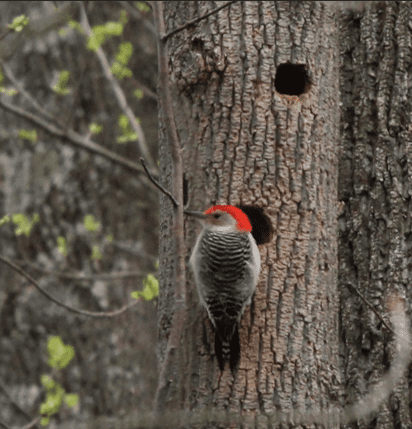
Delaware hosts 7 species of woodpecker, most of which are striking, colorful birds that are quite easy to identify. However, there are two very similar species that continue to befuddle birdwatchers: the Downy Woodpecker and the Hairy Woodpecker. Although the Downy may just look like a smaller version of the Hairy they are not particularly closely related and are now placed in a different genus (Downy = Dryobates pubescens, Hairy = Leuconotopicus villosus).
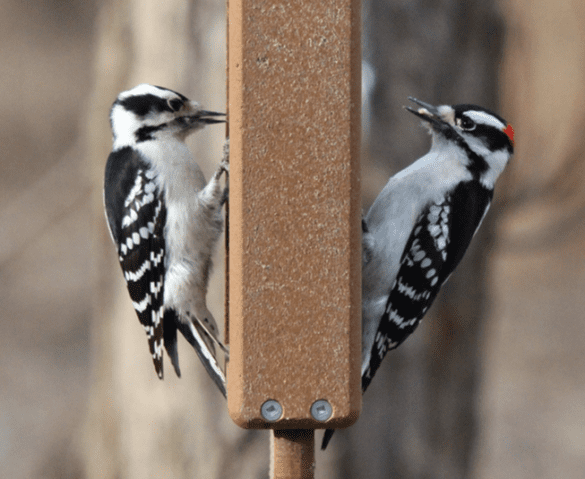
It’s easy to see why they are hard to tell apart. Both are birds of deciduous woodlands that will also show up in your backyard. Both have black upperparts richly patterned with white spots and streaks, as well as a plain white underside. Both have a tuft of dense feathers at the base of their bills which probably stops wood chips flying up their nostrils while they are pecking at bark for insects or digging out a nest hole. In both species, the males have a bright red patch at the back of their head which the females don’t.
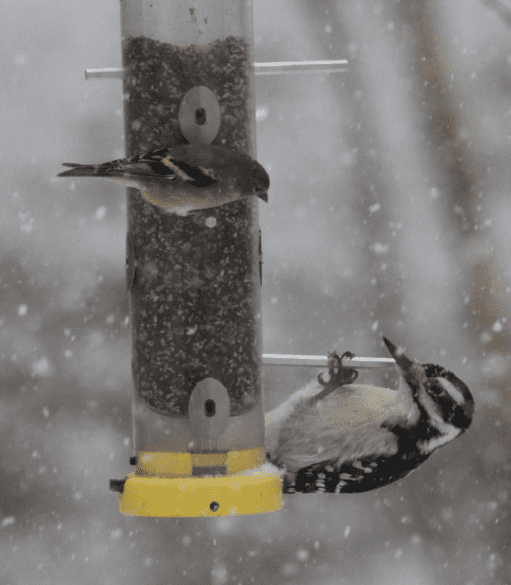
Nevertheless, there are a few key differences which help you separate them.
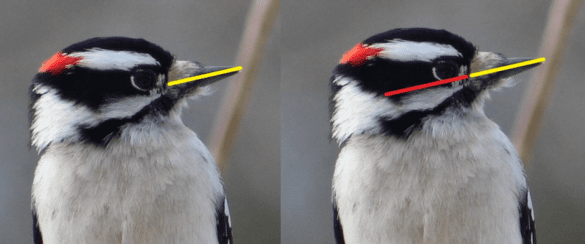
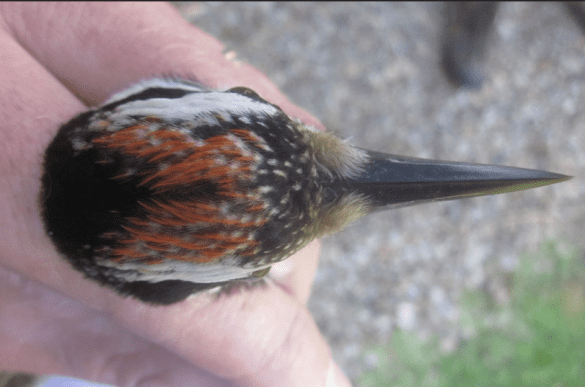
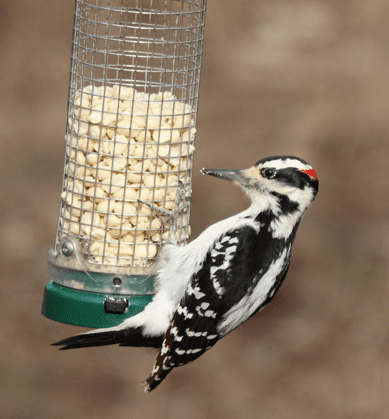
1) Bill length. A reliable way to tell the two species apart, especially at close range, is the length of their bill. Downy Woodpeckers have a very short, pointed bill and the fuzzy patch at the base seems disproportionately large. Hairy Woodpeckers have a longer, more chisel-shaped bill and a smaller tuft of nasal feathers.
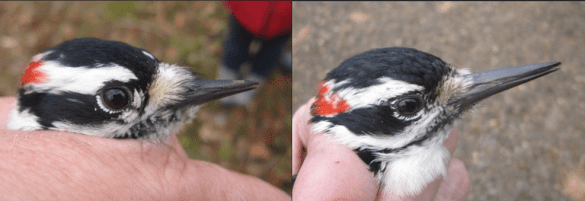
It’s a gruesome thought, but when you see a woodpecker up close, try to imagine their bill being turned around 180 degrees then poked back into their head. If you think the tip of their bill would stick out of the back of its head then it’s a Hairy Woodpecker, but if it wouldn’t then it’s a Downy Woodpecker! Hairy Woodpeckers also appear to have a relatively larger and more square head.

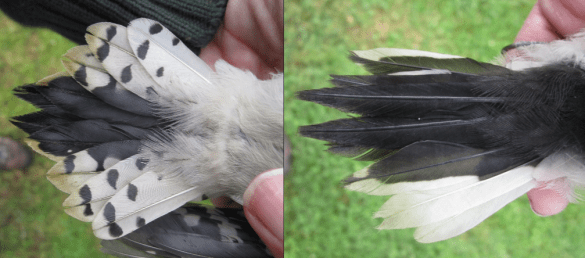
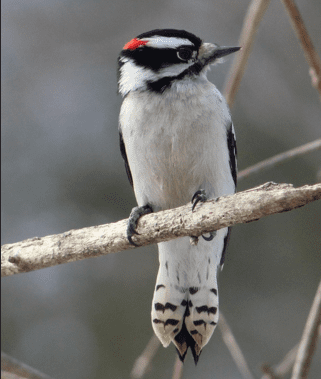
2) Outer tail feather color. The central tail feathers of both species are long and all black, whereas their outer tail feathers are white. However, the outer tail feathers of Downy Woodpeckers also contain black bars which are usually very visible. Woodpeckers often spread out their tails for support when they perch in trees which gives you a good opportunity to check out their outer tail feathers for black bars.
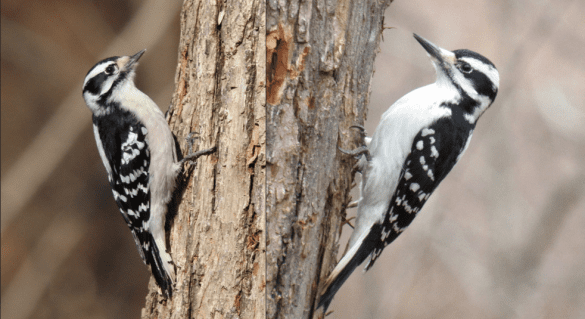
3) The white comma. Hairy Woodpeckers often show a white ‘comma’ at the bend of their wing, which is not present in Downys. However, the comma can be hidden if the bird’s feathers are fluffed up.
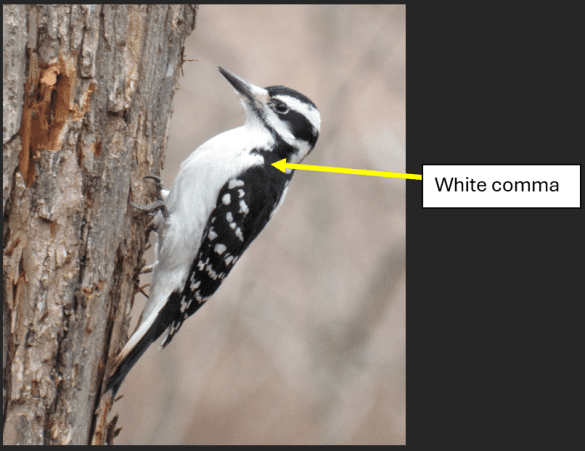
4) Body size. Hairy Woodpeckers are noticeably bigger and bulkier than Downy, which you can remember by the folksy saying Downy is dinky, hairy is hefty! We have banded both species at our public bird banding station, and Hairy Woodpeckers are more than twice as heavy as Downy Woodpeckers (an average of 63g versus 26g, such that Downys are about the same weight as a sparrow).
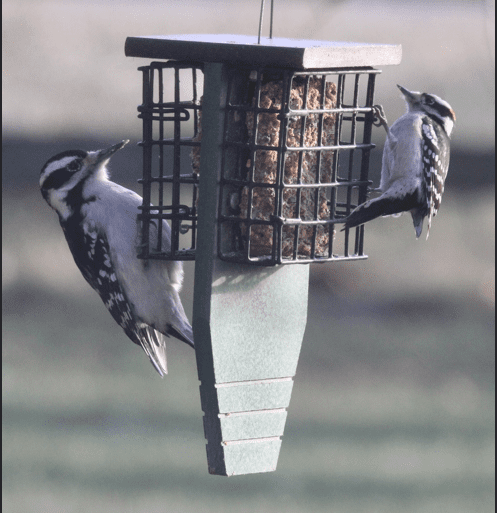
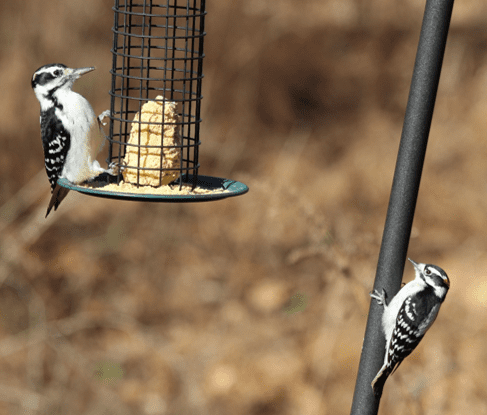
One trick is to familiarize yourself with how big the Downy looks in relation to your suet cake cage, then if you later see a Hairy perched on the same cage you will recognize that it is larger. Alternatively, judge the size of your mystery woodpecker in relation to a familiar bird it is feeding alongside, such as a Red-bellied Woodpecker. These are about the same size as Hairy Woodpeckers but noticeably larger than Downys.
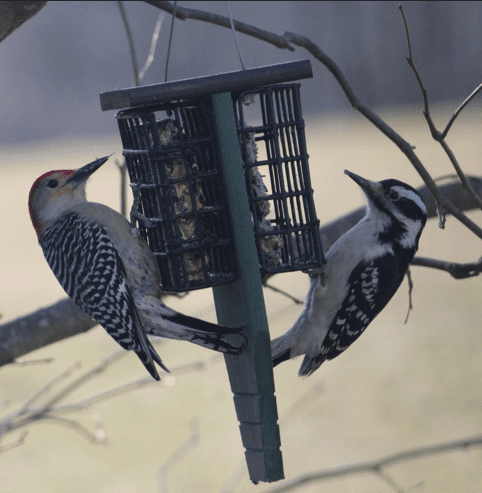
Size can be hard to judge, especially on distant, lone birds, though their location in a tree may give a clue to their identity. Because Hairy Woodpeckers are bulky they almost always perch on trunks or large branches. The smaller Downys are more likely to perch on thin branches or hang onto twigs and are small enough that they sometimes even cling onto grass stems!
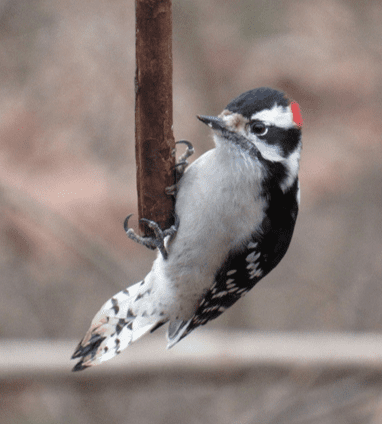
5) Commonality. The Downy Woodpecker rivals the Red-bellied as Delaware’s most common Woodpecker and is significantly more common than the Hairy. The number of Downys recorded on the ‘Spring Round ups’ formerly conducted in Delaware outnumbered Hairys by 4 to 1, and the number recorded on Christmas Bird Counts outnumbers Hairys by 5 to 1. So, if you see a black and white woodpecker it’s more likely to be a Downy but be sure to take another look in case it’s a Hairy!
You can readily attract both these species as well as several other woodpeckers by putting out food, especially in the cold winter months. Woodpeckers have a particular fondness for suet cakes, suet blocks, and whole peanuts, but will happily eat black oil sunflower seeds.
You can also attract them to your property by leaving snags in which they can find food and nest, provided the snags are not a hazard. Woodpeckers may reuse an unoccupied hole or excavate a new hole, which they will find easier as the dead or dying tree dries out.