For more than 30 years, Delaware Nature Society has worked with New Castle County to expand forest cover at Middle Run Natural Area. This 890-acre county park is a gem of the park system. There are no sports fields, playgrounds, event spaces, or major structures here. Instead, the landscape is defined by woodlands, meadows, and streams.
Miles of trails wind through the park’s hills and valleys, drawing hikers, cyclists, birders, and other nature enthusiasts. Middle Run also connects with White Clay Creek State Park and the Judge Morris Estate, creating an extensive trail network. If you wanted, you could walk from Kirkwood Highway all the way into Landenberg, Pennsylvania.
At the heart of Middle Run is mature forest that has remained largely undisturbed for more than a century. Former agricultural fields border these woods, adding diversity to the landscape while also providing an opportunity to make the forest larger.
Our vision for the park is to protect, maintain, and expand this forest. Large, unbroken forests are increasingly rare in our region. Many have been reduced by development or fragmented by roads, utility corridors, pipelines, and other infrastructure. At Middle Run, Delaware Nature Society and New Castle County are working to reverse that trend by doing something simple but powerful: creating more forest.
More than 50,000 Trees
Over the past three decades, we have planted more than 50,000 trees, re-establishing forest on 107 acres of parkland. Walk through the older planting areas today and you might never guess they were once open fields. Native oaks, maples, sycamores, tuliptrees, birches, willows, and other species have grown together to form young forests.
Just as important as the trees themselves is the community that has planted them.
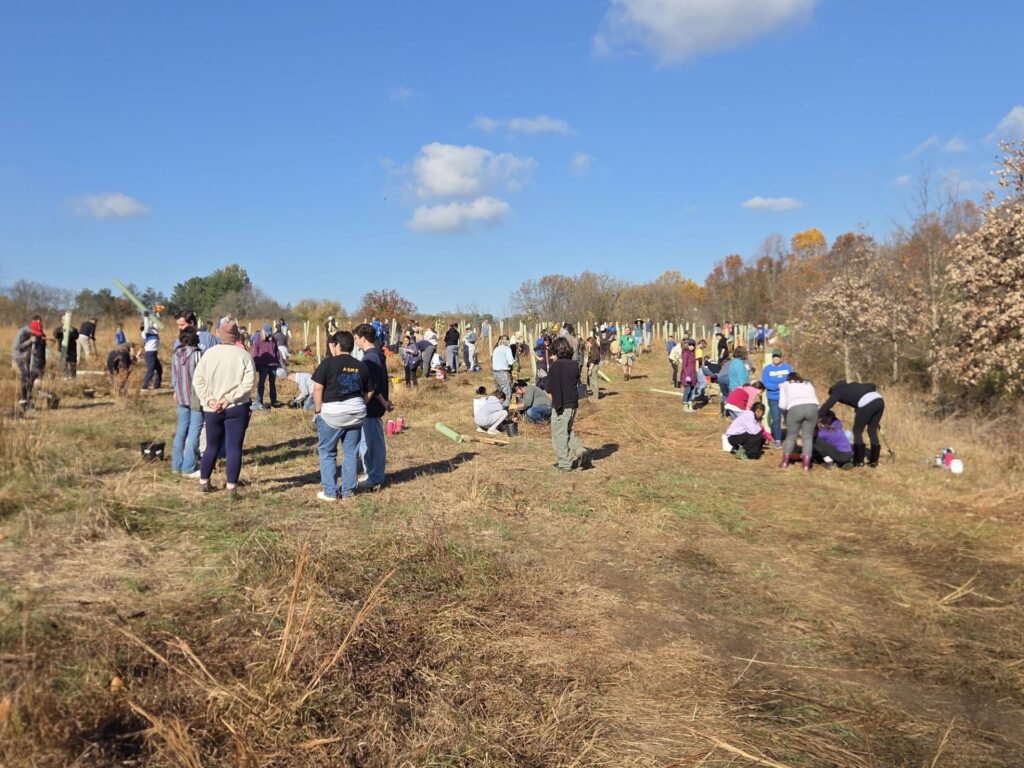
Once or twice each year, we invite the public to join us for large tree-planting events. Hundreds of volunteers have participated, including families, Scout groups, civic organizations, and other community groups. Local businesses and corporations also contribute by funding trees and bringing employees to Middle Run to help plant them. Together, thousands of people have played a part in building this forest, one tree at a time.
Planting With a Purpose
We don’t plant trees just anywhere in the park. Our strategy is designed to strengthen and expand the existing forest. We focus on open areas where new plantings can fill gaps, connect wooded areas, and enlarge the park’s core forest habitat.
We also plant trees along streams, particularly Middle Run, a tributary of White Clay Creek. Forested stream corridors provide many ecological benefits. Trees shade the water, helping to keep it cool and maintain conditions for aquatic life. Fallen leaves contribute organic material that supports the aquatic food web, while tree roots hold soil in place, reduce erosion, and stabilize streambanks.
A Young Forest Comes to Life
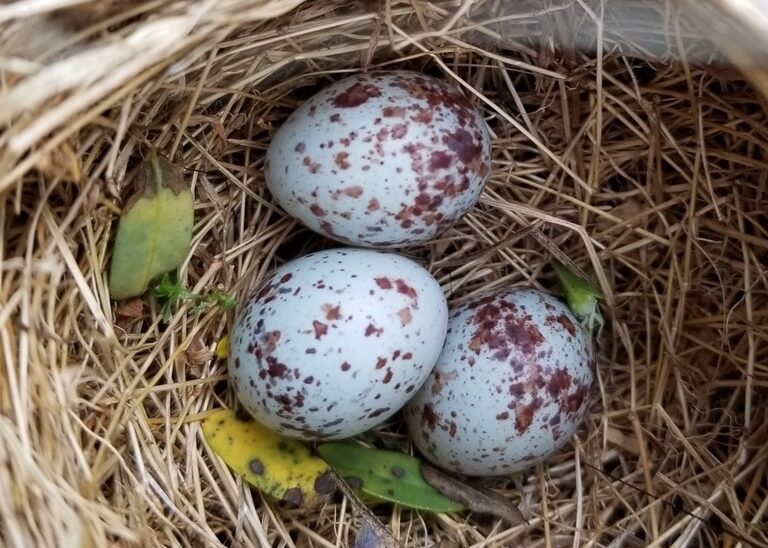
Wildlife responds quickly when trees are planted and habitat begins to recover. Birds are among the most noticeable residents of our reforestation areas. In our largest planting, nesting species include Field Sparrow, Orchard Oriole, Willow Flycatcher, Indigo Bunting, and Blue Grosbeak, among others. As this forest ages and the trees grow bigger, other species will take their place, including Wood Thrush, Red-eyed Vireo, Scarlet Tanager, and Ovenbird.
We typically do not mow all the vegetation surrounding the young trees. Allowing grasses, wildflowers, and other plants to grow provides valuable cover for wildlife, flowers for pollinators, and a diverse habitat as the forest develops.
Planting a tree, however, is only the beginning.
Young trees face several significant threats, including White-tailed Deer, Meadow Voles, and invasive plants. Porcelainberry, an invasive vine from Asia, can grow rapidly and smother small trees if it is not controlled. Throughout the summer, we work to keep porcelainberry and other invasive species from overtaking the planting areas.
Deer browse young trees and can damage trunks by rubbing antlers against them, so trees need protective cages or tubes until they are large enough to withstand deer pressure. Meadow Voles present another challenge. These small rodents live in the vegetation surrounding young trees and may chew their bark and roots. Keeping vegetation low immediately around the base of a tree can help reduce this damage.
Growing a Forest Takes Time
Needless to say, creating a forest is a lot of work. But the results are worth it.
There is something deeply rewarding about walking through a reforestation area that was once an open field and seeing young trees becoming a forest. Even more rewarding is watching these places come alive with nesting birds, native insects, pollinators, and other wildlife.
Thirty years and more than 50,000 trees later, the transformation of Middle Run continues. And thanks to the thousands of volunteers and partners who have helped along the way, this growing forest is truly a community achievement.
Written by: Joe Sebastiani, Director of Land Stewardship
Help Us Plant the Next Generation of Forest
If you would like to be part of the effort, join us for our annual Middle Run Tree Planting!